Most people never lose an account. But when it happens it is stressful and often without warning, so it helps to know the patterns and your rights before it does.
One card or the whole relationship
Not every closure is a "shutdown". In one 2026 case, Chase shut a customer's Amazon Prime Visa for very large spend without ending the rest of the relationship. A full shutdown means the issuer ends the whole relationship and closes every account. The difference matters because a single closure may hurt only that card's points and utilization, while a full shutdown can remove all of your credit lines with that issuer at once.
What reportedly precedes a shutdown
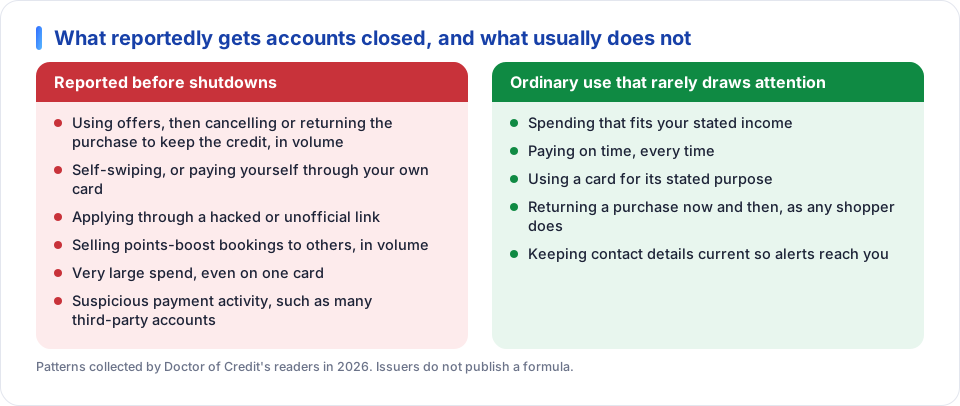
Doctor of Credit's readers described these patterns in 2026. Some Chase Offers now carry fine print that abuse may exclude you from future offers, so the issuer may be moving to penalise that behaviour by removing the offers before it closes anything. The article's author is unsure whether the old advice about paying a card from many banks or third-party accounts still matters.
Your right to a written reason
Under Regulation B, which implements the Equal Credit Opportunity Act, a creditor that takes adverse action on an existing account must notify you in writing within 30 days. Closing an individual account counts as adverse action when it does not affect all or substantially all of a class of accounts. The notice must include either a statement of specific reasons, or tell you that you can ask for them within 60 days and get them within 30 days of asking. One exception: closing an account because you are currently in default or delinquent is not adverse action, though a closure based on a past delinquency generally still needs a notice. See your rights under ECOA.
The first 30 days
Ask for the reason in writing
Call the number on the letter and ask which of the stated reasons applies. Request the specific-reasons statement if the notice did not include one.
Move recurring payments
Update autopays, subscriptions and any card on file before the account stops accepting charges.
Use or protect your points
Cash, transfer or redeem points where terms allow. Citi ThankYou points, for instance, may expire when an account closes. See what points are worth.
Pay the balance as agreed
A closed account with a balance still needs to be paid. Keep paying on the same schedule.
Check your reports
Look at your credit reports for the closure and your utilization. See reading your credit report and utilization.
Ask for reconsideration once
Call the reconsideration line and state what you did. If the reason was a mistake, you may get a decision reversed. If not, move on.
Questions people ask
Can an issuer close my account without a reason?
Issuers can end accounts under the terms of the cardholder agreement. But if the closure is a credit decision on an existing account, US rules generally require written notice with specific reasons, or a notice of your right to ask for them.
Will closing a card hurt my credit score?
It can reduce your total available credit and so raise your utilization. See the utilization guide. A card closed in good standing is not the same as a delinquent one.
Should I appeal the decision?
It costs nothing to ask. Call the reconsideration line, state the facts and ask for the reason in writing. Keep the call short and polite.
Sources
Written from these pages and checked against them on October 6, 2026. Programs and rules change, so check the provider’s current terms before you decide.
- Doctor of Credit (further reading): What causes Chase credit card shutdowns?
- CFPB: Regulation B 1002.9, notifications (30 days; statement of specific reasons)
- CFPB: Regulation B 1002.2, definitions (adverse action includes closing an account)
- US Credit Card Guide (further reading): Citi Strata Premier review (ThankYou points can expire when an account closes)
General information, not financial, legal or travel advice. Your own card terms and the provider’s current rules always come first.