When you apply for a credit card, a loan or a phone contract, you are asking a business to take a risk on you. US law lets the business weigh that risk, but it limits what it can weigh. This guide covers the rules that matter most when you apply, with a note for newcomers who may have no US history yet.
What lenders may and may not use
The Equal Credit Opportunity Act (ECOA) was enacted in 1974 and is implemented by Regulation B. It applies to all creditors. The idea is simple: the decision should be about whether you are likely to repay, not about who you are.
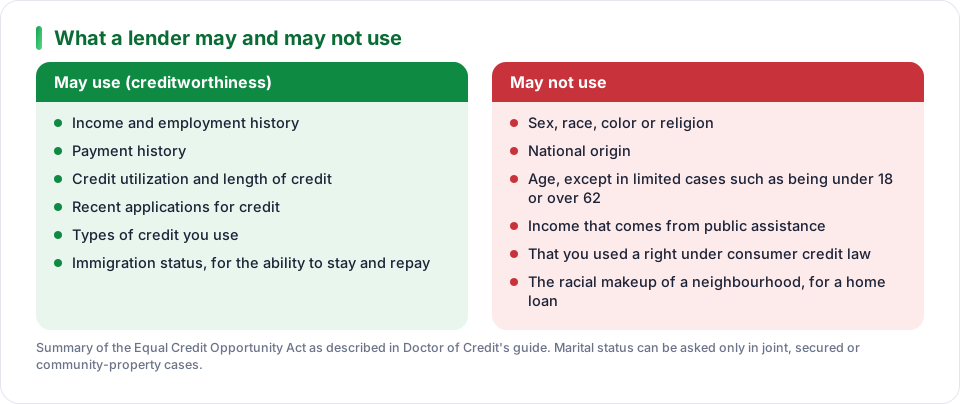
Two points matter for newcomers. A lender may ask about immigration status, because it may check you can stay long enough to repay. That is different from discriminating against your national origin, which it may not do. And a thin file is a fact about your credit history, not a protected trait, so being new is a valid reason to be offered a smaller line or a secured product (see building credit as a newcomer).
What happens after you apply
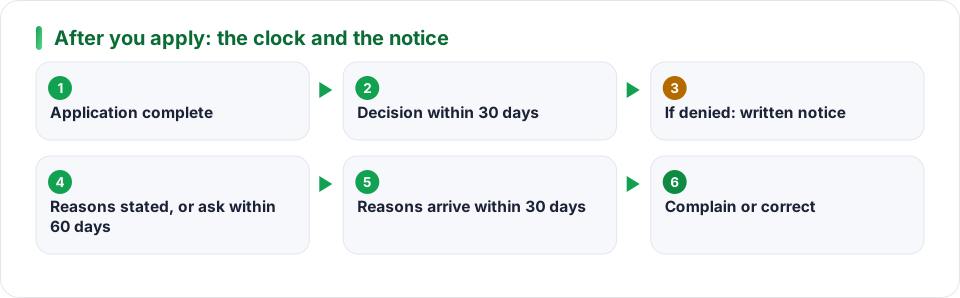
Once your application is complete, the lender has 30 days to tell you the decision. If the decision is adverse, the notice has to be in writing and say what was decided, who the creditor is, and which federal agency oversees them. It also has to either give the specific reasons or tell you that you can ask for them within 60 days, in which case they must arrive within 30 days of the request. A reason such as "your application did not meet our standards" is not specific enough. "Too many recent inquiries" or "limited length of credit history" are.
If you think a decision was unfair
Ask the lender to reconsider
Send a short written complaint or call the reconsideration line. Sometimes a lender reverses a decision.
Contact your state attorney general
They can check whether a state law was broken.
Report to the agency on the notice
The notice must name the federal agency that supervises the lender. If it did not, contact the Federal Trade Commission.
Consider legal advice
ECOA allows damages if a lender is found to have broken it. Do not rely on a summary: ask a consumer-law attorney.
Other protections
ECOA also gives you the right to credit in your own name, in your birth name or your first name with your spouse's last name or a combined one. A lender cannot demand a cosigner if you qualify alone, and you can use a cosigner who is not your spouse. You also keep your accounts when your name or marital status changes, when you reach a certain age or when you retire. For why accounts are closed anyway, see why issuers close accounts.
Questions people ask
Can a lender ask about my visa or immigration status?
Yes. A lender may ask whether you can legally stay in the country long enough to repay the debt. It still may not discriminate because of your national origin.
Can I be denied because I receive public assistance?
A lender may not treat income from public assistance as a negative simply because of its source. It may still consider whether your income is enough and how reliable it is.
Does ECOA apply to credit cards?
Yes. It applies to all creditors, including card issuers, and covers applications and existing accounts.
Sources
Written from these pages and checked against them on October 6, 2026. Programs and rules change, so check the provider’s current terms before you decide.
General information, not financial, legal or travel advice. Your own card terms and the provider’s current rules always come first.