A flat 2 percent card is the one you use for everything that has no better card. Citi Double Cash and Wells Fargo Active Cash are two of the best known, both with no annual fee. They look identical on the surface, but they pay out differently and differ on the bonus, the intro rate and the extras. This guide compares what the issuers list in October 2026.
The two cards side by side
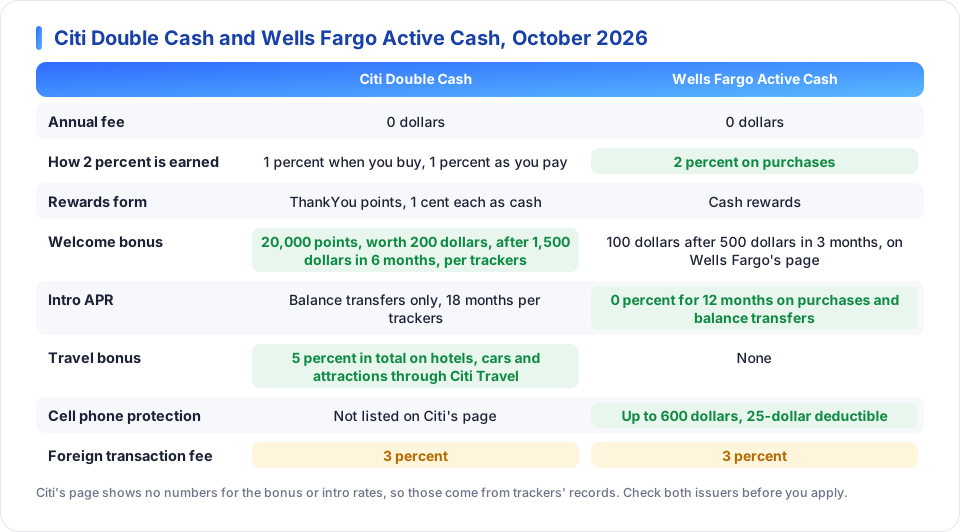
How the 2 percent is earned
Wells Fargo's page says you earn unlimited 2 percent cash rewards on purchases, with no activation, no categories and rewards that do not expire as long as the account is open. Citi's page says you earn 1 percent when you buy and an additional 1 percent as you pay, on every purchase, and that the cash back comes as ThankYou points you can redeem as a statement credit, direct deposit or check. If you pay your bill in full each month, the two work out the same. Citi also lists an additional 3 percent on hotels, car rentals and attractions booked through Citi Travel, for 5 percent in total.
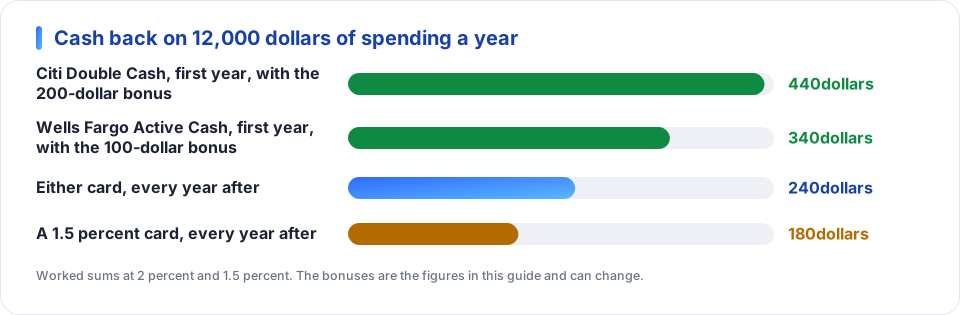
The first year, and every year after
Intro rates and the extras
Wells Fargo lists a 0 percent intro APR for 12 months on purchases and on qualifying balance transfers made within 120 days, with a balance transfer fee of 5 dollars or 3 percent, whichever is greater, during that time. Citi's page says its intro rate applies to balance transfers only and not to purchases. Trackers record 18 months for transfers made early in the account's life, with a 3 percent fee at first and 5 percent after that. Wells Fargo also lists cell phone protection of up to 600 dollars with a 25-dollar deductible when you pay your phone bill with the card, and auto rental collision damage cover.
The rules around applying
Both issuers exclude you from the bonus if you had the card recently: Wells Fargo for 48 months, even if you closed the account, and Citi for 48 months after a Double Cash bonus. Older reviews mention a Citi limit of one application every 8 days and two every 65 days, and a Wells Fargo wait of about 6 months after opening another Wells Fargo card. These come from reviewers and are dated, so confirm them. See the US issuer application rules.
Check your history
Look for any Double Cash or Active Cash in the past 48 months before you apply.
Match the intro APR to your plan
Choose Wells Fargo if you want 0 percent on a purchase. Choose Citi only for a balance transfer.
Use it for everything with no better card
Put the rest of your spending on it, and pay it off in full.
Pair it with category cards
Use cards with higher category rates where they apply, and the flat card for the rest.
Citi's points
Citi's cash back arrives as ThankYou points, which are worth 1 cent each as cash. Reviewers explain that points on the Double Cash can be pooled with other ThankYou cards, and that holding a Citi card that can transfer points to airline and hotel partners lets you move points there. See Citi ThankYou points in 2026 before you chase this, because it turns a simple card into a points strategy.
Is it right for you?
Fits you
- You want one card that earns 2 percent on everything without tracking categories.
- You want a base card for spending that no bonus-category card covers.
- You may carry a balance transfer or a big purchase and want an intro rate.
Think twice
- You spend heavily on groceries, gas, dining or travel, where other cards earn 3 to 6 percent.
- You travel abroad, where both cards charge 3 percent.
- You carry a balance, where interest costs more than any reward.
See also which US cards are worth getting by spending style and how to price a sign-up bonus.
Questions people ask
Do I really earn 2 percent right away on the Citi card?
Citi's page says you earn 1 percent when you buy and an additional 1 percent as you pay, as long as there is a matching purchase balance. If you pay your bill in full each month the result is 2 percent. If you carry a balance, interest costs far more than the reward.
Which one has the better welcome bonus?
On the day of this guide, Wells Fargo's page lists 100 dollars after 500 dollars in 3 months. Trackers recorded 20,000 ThankYou points, worth 200 dollars, after 1,500 dollars in 6 months for Citi. Offers differ by channel and change, so read the one you are shown.
Can I use either abroad?
Both charge 3 percent of each transaction converted to US dollars, according to Wells Fargo's terms and to reviewers' records for Citi. For trips abroad use a card with no foreign transaction fee, and keep the flat card for home.
Can I get the bonus again if I had the card before?
Wells Fargo's terms say you may not be eligible for bonus offers or intro rates if you have, or opened within the last 48 months, an Active Cash account, even if it is closed. Citi's offer text says the bonus is not available if you got a new account bonus for a Double Cash account in the past 48 months.
Do these cards count toward Chase's 5/24 rule?
Reviewers report that both are reported to personal credit and count as new accounts. See the guide to US issuer rules for how 5/24 and the issuers' own limits fit together.
Sources
Written from these pages and checked against them on October 8, 2026. Programs and rules change, so check the provider’s current terms before you decide.
General information, not financial, legal or travel advice. Your own card terms and the provider’s current rules always come first.