Sign-up bonuses are the fastest way to turn a bit of spending into travel, but their headlines mislead. Two cards offering 75,000 points can differ by hundreds of dollars once the fee, credits and spend requirement are counted. This guide gives you a formula that works on any offer, then applies it to nine from October 2026.
The formula
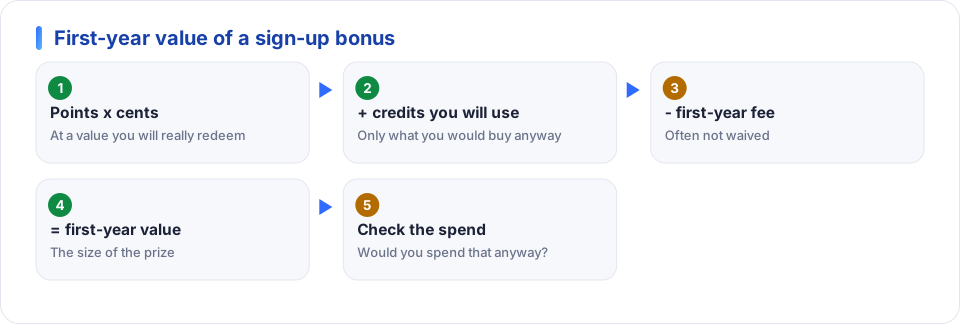
- First-year value
- Bonus points at your value per point, plus credits you will really use, minus the first-year annual fee.
- Minimum spend
- The purchases required within a time window to earn the bonus. The annual fee does not count toward it.
- Cents per point
- What each point is worth when you redeem it. USCCG uses 1.6 cents for flexible bank points as an estimate.
A check on the arithmetic: AmEx Platinum is 175,000 points at 1.6 cents, which is $2,800. Add $900 of credits and subtract the $895 fee to get $2,805.
Nine offers, priced twice
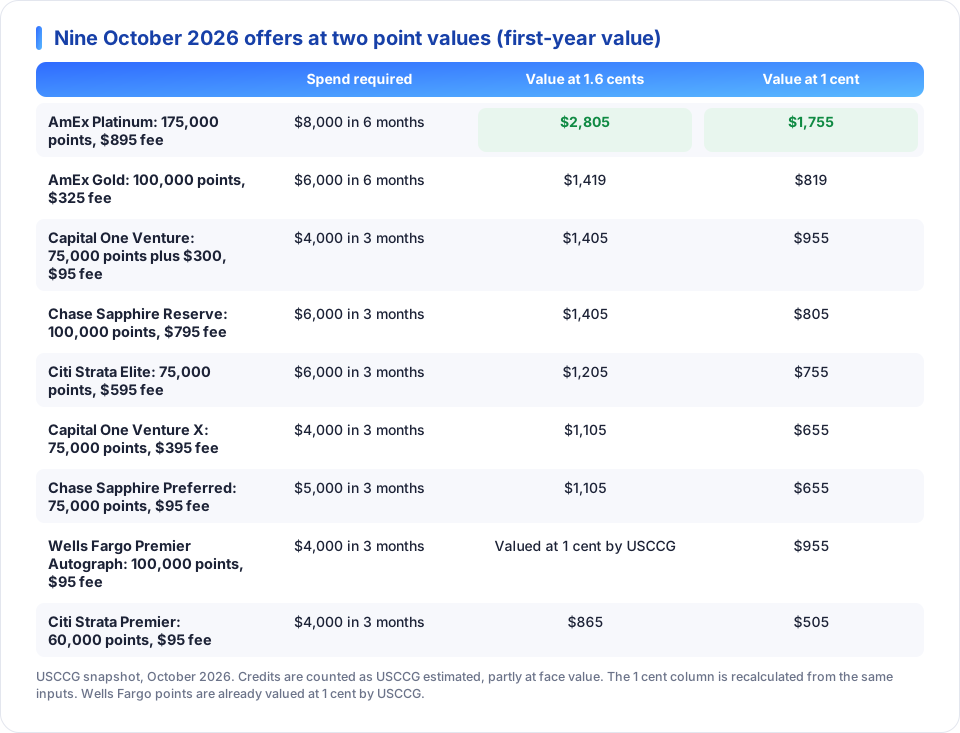
Three lessons stand out.
The leader leads either way
The Platinum bonus is large enough to lead at both valuations, but it asks for $8,000 and a $895 fee.
The middle reshuffles
Capital One Venture jumps up at 1 cent because $300 of its bonus is cash. Reserve drops because its value came from points and credits.
Cheap cards hold their ground
A $95 fee barely dents a bonus, so cards like the Preferred and Venture look good in year one, then must earn their keep.
Is the spend realistic?
The spend requirement is the hidden cost of a bonus. If you do not normally spend $6,000 in three months, chasing the bonus means buying things you would not buy, or paying large bills early.
Total your normal spending
Add up three to six months of ordinary purchases. Include planned costs such as insurance, tuition or travel.
Compare to the requirement
If the requirement exceeds your usual spending, check whether you can move legitimate bills onto the card without paying fees or interest.
Pay in full
Interest will wipe out the bonus. See how credit card interest works.
Time your application
Check the issuer's rules, such as Chase's 5/24 and lifetime rules, before you apply.
A worked example with your own numbers
Take a 75,000-point offer on a card with a 95 dollar annual fee. At 1 cent a point the points are worth 750 dollars, and at 1.5 cents they are worth 1,125 dollars. Subtract the fee and the first-year value is 655 or 1,030 dollars. Then subtract what the required spending would have earned elsewhere: 5,000 dollars on a 2 percent card is 100 dollars, which leaves 555 or 930 dollars. The same offer can look ordinary or excellent depending on the two numbers you control: the cents per point you can realistically get, and the spending you would have done anyway.
Questions people ask
Why does the same offer have different values on different sites?
Because they assume a different value per point and count credits differently. Always look at the points, the minimum spend and the fee, then plug in your own cents-per-point.
Should I choose the card with the biggest first-year value?
Not automatically. The annual fee returns in year two, the spend requirement may push you into buying things you do not need, and the card may not fit your daily spending. See the long-term card choices in the best-cards guide.
What does the 'credits you would really use' mean?
Only count credits for things you would buy anyway. USCCG counts a share of face value for many credits, such as 60 percent, because few people use all of them.
Sources
Written from these pages and checked against them on October 6, 2026. Programs and rules change, so check the provider’s current terms before you decide.
General information, not financial, legal or travel advice. Your own card terms and the provider’s current rules always come first.