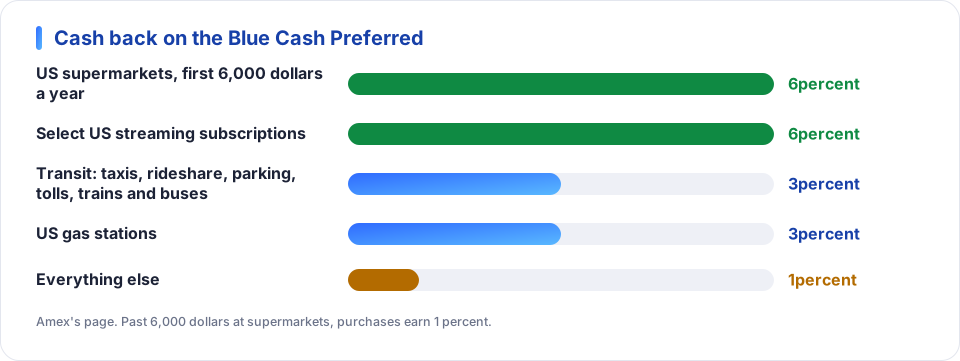
The Blue Cash Preferred is the grocery card of the American Express range. It pays 6 percent at US supermarkets, which is three times what a flat 2 percent card earns, but only on the first 6,000 dollars a year, and it earns just 1 percent on most other spending. That mix makes it brilliant for some households and a drag for others. This guide shows what Amex lists in October 2026 and how to work out which you are.
The card at a glance
- 0 dollars
- First-year fee
- 6%
- US supermarkets and streaming
- 3%
- Transit and US gas
- 2.7%
- Foreign transaction fee
Then 95 dollars a year
Supermarkets up to 6,000 dollars a year
Taxis, rideshare, parking, tolls and trains
Charged on each converted transaction
The cash back arrives as Reward Dollars, which Amex says you can redeem as a statement credit or use at checkout at Amazon.com. Amex also lists a streaming credit of up to 10 dollars a month at Disney+, Hulu and ESPN streaming, worth up to 120 dollars a year, and purchase protection for 90 days, up to 1,000 dollars per purchase and 50,000 a year.
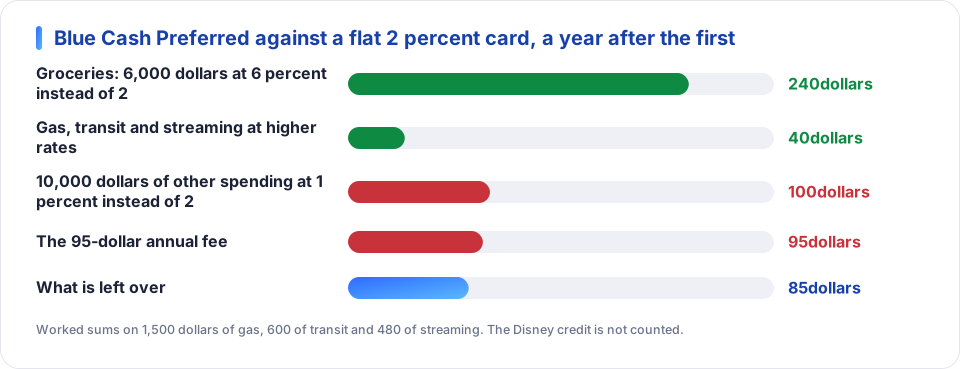
Does it beat a flat 2 percent card?
The answer depends on how your spending splits. The grocery rate gives the extra, and the 1 percent rate on everything else takes some back.
The rules around applying
Amex's page does not state a welcome offer. Trackers record an "as high as" offer of 300 dollars after 3,000 dollars in the first 6 months in 2026, after 250 dollars before that. Amex says it shows your decision before you accept, and that it does not affect your credit score until you do. The offer you see can be lower, so judge it with how to price a sign-up bonus.
Size your groceries
Add up a year of supermarket spending. If it is well under 3,000 dollars the card has little to work with.
Check where you shop
Make sure your main stores count as supermarkets, not warehouse clubs or big-box retailers.
Decide what takes the rest
Have a flat 2 percent card ready for everything outside the bonus categories.
Plan the order
If you want both Blue Cash cards, apply for the Everyday first.
Is it right for you?
Fits you
- Groceries at US supermarkets take a big share of your budget, up to about 500 dollars a month.
- You already pay for Disney+, Hulu or ESPN streaming and will use the monthly credit.
- You are happy to pair it with a flat 2 percent card for everything else.
Think twice
- You shop mostly at Costco, Walmart or Target, which reviewers say do not count as supermarkets.
- You want one card for all of your spending.
- You travel abroad often, because of the 2.7 percent foreign fee.
See also which US cards are worth getting by spending style and Citi Double Cash versus Wells Fargo Active Cash.
Questions people ask
Which stores count as supermarkets?
Amex's page says US supermarkets. Reviewers note that Amex does not count Target, Walmart or Costco, which earn 1 percent. Check Amex's current terms and your own receipts before you plan around a store.
What happens after 6,000 dollars of groceries?
Amex's page says the 6 percent applies on up to 6,000 dollars a year in purchases at US supermarkets, then 1 percent. Reviewers say the limit runs by calendar year, so it works out to about 500 dollars a month.
How do I get the cash back?
Amex says it arrives as Reward Dollars, which you can redeem as a statement credit or use at checkout at Amazon.com, where they have the same value.
How does the streaming credit work?
Amex's page says up to 10 dollars a month in statement credits after you use the enrolled card for a subscription, including a bundle, at DisneyPlus.com, Hulu.com or Stream.ESPN.com US websites, subject to auto-renewal.
Is there a foreign transaction fee?
Yes. Amex's page says the Blue Cash Preferred charges 2.7 percent on each transaction after conversion to US dollars, so use a card with no foreign fee abroad.
Sources
Written from these pages and checked against them on October 8, 2026. Programs and rules change, so check the provider’s current terms before you decide.
Cards in this guide
General information, not financial, legal or travel advice. Your own card terms and the provider’s current rules always come first.