The Fair Credit Reporting Act, known as the FCRA, was passed in 1970 and strengthened in 2003 with the FACTA amendment. It governs the companies that collect and sell information about your credit. Most people never read it, but its rights are some of the most useful tools you have. Here are eight, each with the clock that matters.
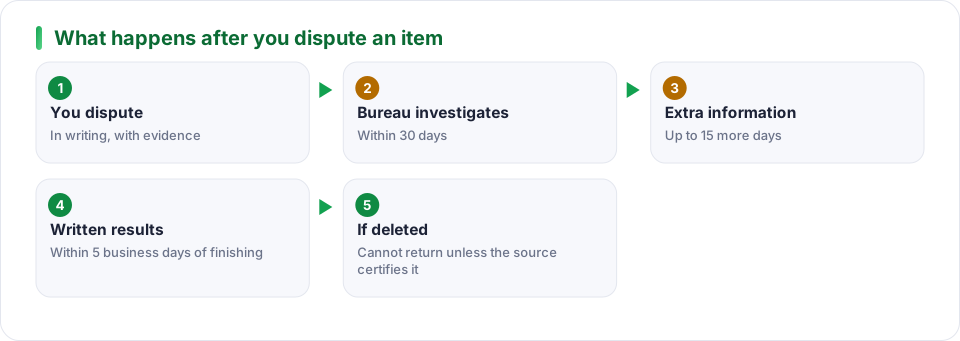
The dispute clock
The eight rights
1. See your file
One free report every 12 months from each bureau on request, and free weekly reports at AnnualCreditReport.com.
2. Be told when your file was used
If a lender denies you because of your report, it gives the bureau's details and your right to a free copy within 60 days.
3. Limit who looks
Only people with a permissible purpose can pull your report, and employers need your consent.
4. Dispute mistakes
Bureaus must investigate and correct or delete wrong, incomplete or unverifiable items, generally within 30 days.
5. Old items fall off
Negative items generally drop off after seven years, bankruptcies up to ten.
6. Opt out of offers
Stop prescreened credit and insurance offers at OptOutPrescreen.com.
7. Place alerts and freezes
Fraud alerts and freezes are free. A freeze lasts until you lift it.
8. Take action
Complain to the CFPB or FTC, add a dispute statement, or consult a consumer attorney.
How the rights turn into results
Pull all three reports
Use AnnualCreditReport.com. Read every item. See reading your credit report.
Mark the errors
Write down each wrong item, its account number and why it is wrong. Collect proof.
Dispute with the bureau and the source
Send a written dispute to each bureau that shows the error, and to the company that supplied it. See disputing credit report errors.
Keep records
Use a method that proves delivery, and keep copies.
Protect yourself
If your identity may be exposed, place a fraud alert or a freeze. See credit freezes and fraud alerts.
Mistakes that cost people their rights
Waiting for a decline before looking at a report. Check at least once a year, and before any big application.
Disputing by phone only. Use a letter or the bureau's online form and keep proof, because the clock runs from the date the bureau receives your dispute.
Treating a freeze as if it expires. A freeze lasts until you lift it, unlike a fraud alert, which runs for one year at first.
Forgetting the source. A dispute filed only with the bureau leaves the company that reported the error free to report it again.
Good to know
See also how long negative marks stay on your report and your rights under ECOA.
Questions people ask
Does checking my own report hurt my score?
No. Checking your own credit report is not a hard inquiry. See the guide on soft and hard inquiries.
Who may look at my credit report?
Only people with a permissible purpose, such as a lender you applied to, an insurer or a landlord. An employer needs your permission before obtaining your report.
What if the bureau keeps the error after my dispute?
You can add a statement of dispute to the report, send a complaint to the CFPB and consult a consumer attorney. Courts can award statutory damages in cases of willful violations.
Sources
Written from these pages and checked against them on October 6, 2026. Programs and rules change, so check the provider’s current terms before you decide.
General information, not financial, legal or travel advice. Your own card terms and the provider’s current rules always come first.