A late payment feels permanent when it happens. It is not. US law sets time limits on how long most negative information can sit on a credit report, and knowing them helps you plan the next application and spot a report that is out of date.
The clocks
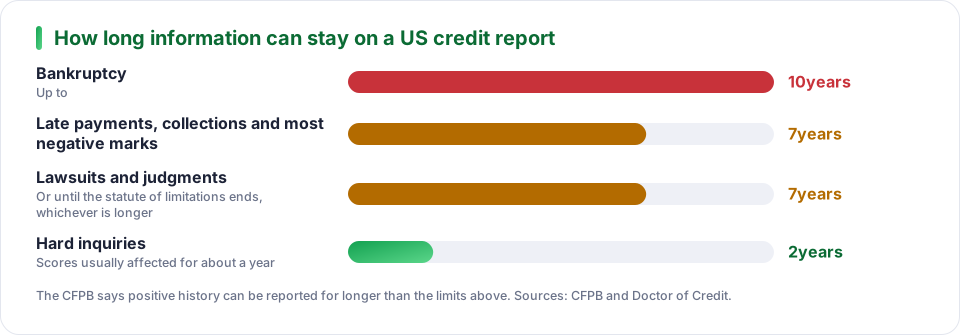
The CFPB's guidance says credit reporting companies can generally report negative information about your payment history for up to seven years, and may report positive information for longer. A positive on-time history may remain after the loan is paid off and even after the account is closed, which is why closing a long-held card does not erase its good years.
The exceptions
Time limits are not absolute. The CFPB notes that they do not apply if the report is used in connection with an application for a job that pays more than $75,000 a year, or an application for more than $150,000 of credit or life insurance. And even after the limit, a bureau may still keep the data on file, though it should not report it to the usual users.
What you cannot buy
Many firms promise to "repair" or "fix" your credit for an upfront fee. The CFPB's tip is blunt: no one has the right to remove accurate negative information, such as late payments, from a credit report. Only errors can be fixed, and you can do that yourself at no cost. If a firm promises to delete accurate items, treat it as a warning sign.
Get your reports
Free weekly at AnnualCreditReport.com. See reading your credit report.
Check dates and status
Each negative item should show a start date. If it is past the limit, or it is wrong, dispute it. See disputing credit report errors.
Dispute in writing
Include evidence and keep copies. Use the free route, not a repair firm.
Add positive history
On-time payments and low utilization outweigh old marks over time. See utilization.
What lenders must tell you
Under the Fair Credit Reporting Act, creditors who report negative information must tell you. Doctor of Credit's sample shows how it is usually done: the notice sits in your regular correspondence, before a late payment and again after one. "We may report information about your account to credit bureaus," it says, and later, "We have told a credit bureau about a late payment." If you ever miss a payment, look for that line on the next statement.
For how scores respond to all this, see which credit score do lenders see. If a collector is on the other end of an old debt, see debt collectors: your rights.
Questions people ask
Does paying off a collection remove it?
Paying it does not make accurate information disappear. A paid collection can stay on your report until the time limit ends. Ask the collector in writing what it will report, and keep a copy.
Will a late payment hurt me forever?
The effect fades as it ages and as you add on-time history. It is not permanent, and the report entry ends at its limit.
Do hard inquiries follow the same seven years?
No. A hard inquiry stays on a report for about two years and affects scores for about a year.
Sources
Written from these pages and checked against them on October 6, 2026. Programs and rules change, so check the provider’s current terms before you decide.
General information, not financial, legal or travel advice. Your own card terms and the provider’s current rules always come first.