Banks pay new customers to open accounts. Sites such as Doctor of Credit track the offers closely, and the pay can look generous. But the cash comes with conditions, and a bonus you fail to collect or cannot afford to qualify for is worth zero. This guide covers the mechanics, the arithmetic and the paperwork.
Read the offer like a contract
| Term | What to look for | Why it matters |
|---|---|---|
| Requirement type | Direct deposit, minimum balance, debit transactions or bill payments | The method decides whether a deposit counts. Banks define a qualifying direct deposit in their own terms. |
| Amount and timing | How much, by which date | Missing the deadline by a day usually means no bonus. |
| Eligibility | New customers only, or no account within a stated period | Existing or recently closed customers are often excluded. |
| Holding period | How long the account must stay open | Closing early can mean losing the bonus or paying a fee. |
| Fees | Monthly fee and how to waive it | A waived-fee condition can quietly eat the bonus. |
| Region | State or branch limits | Some offers are not available everywhere. |
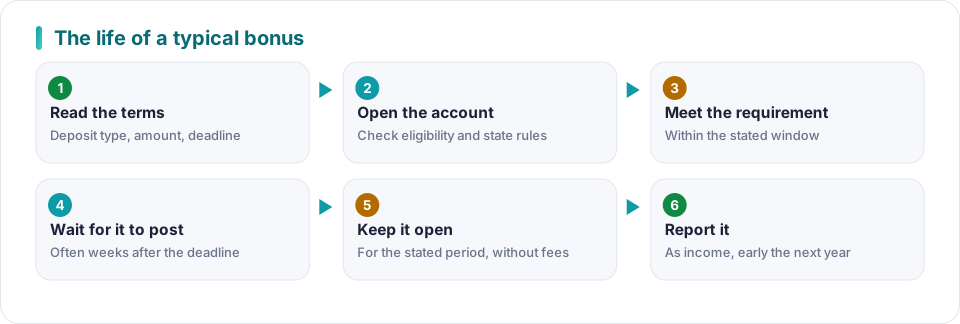
The life of a bonus
Annualise it: is the cash worth parking?
Divide the bonus by the cash you must park, multiply by 365 and divide by the number of days. That is the simple annualised rate.
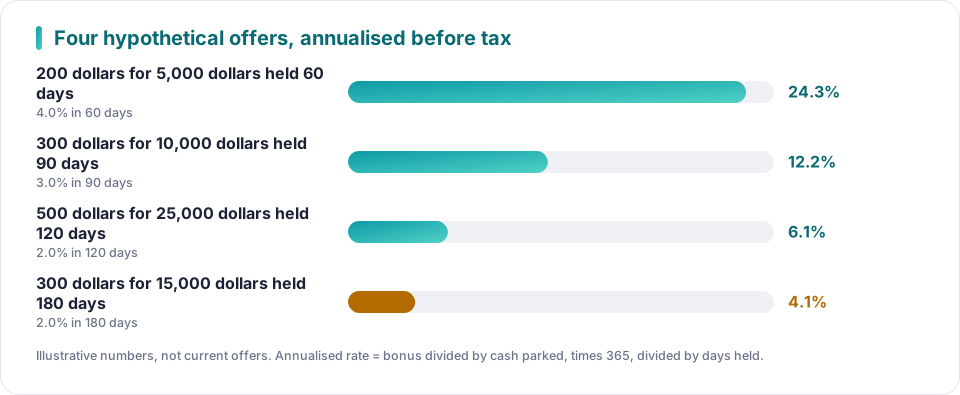
Compare it with what the same cash would earn in a high-yield savings account, and remember that both the bonus and the interest are taxed as ordinary income, so compare them before tax. Keep the money within the limits of deposit insurance.
Records you leave behind
When you apply for a checking account, many banks ask a checking-account reporting company about you. The CFPB says ChexSystems collects data on checking account applications, openings and closures, and ChexSystems says it keeps reported information for five years. Opening and closing many accounts in a short time, or having an account closed for abuse, can make the next application harder. See beyond the big three for how to request your own checking-account report.
The tax bill
The IRS says most interest is taxable in the year it becomes available to you, and that you must report it even if you do not receive Form 1099-INT. The form instructions tell banks to include amounts of 10 dollars or more, whether or not designated as interest, that are paid or credited to a customer's account. Expect the form early the next year, and keep your own record of when the bonus posted. This is general information and not tax advice, so use a professional if your situation is complicated.
Write down the terms
Save the offer page, the dates and the requirement.
Calculate the annualised rate
Use the formula above and compare it with savings interest.
Meet the requirement exactly
Use the qualifying method, and leave a margin before the deadline.
Track the posting
Note the date the bonus lands and keep statements.
Report it
Include it in your income, whether or not a form arrives.
Questions people ask
Is a bank bonus really taxable?
Generally yes. Cash paid for opening or funding an account is usually reported as interest on Form 1099-INT and taxed as ordinary income. The IRS says you must report interest even if you do not receive a form.
Will opening an account for a bonus hurt my credit score?
Most banks screen new checking applications with a checking-account report rather than a credit report, but practices differ. The application or the bank's FAQ should say which it uses, so ask before you apply.
What happens if I close the account early?
Many offers require the account to stay open and in good standing for a stated period, and some banks can charge a fee or take back the bonus. The offer terms are the only authority, so read them before you apply.
Sources
Written from these pages and checked against them on October 6, 2026. Programs and rules change, so check the provider’s current terms before you decide.
General information, not financial, legal or travel advice. Your own card terms and the provider’s current rules always come first.