If you freelance for clients in other countries, receive a pension from abroad or study somewhere new, you have probably met a wire fee and a poor exchange rate in the same payment. Multi-currency accounts were built to reduce both. This guide explains how they work, what an electronic money institution is, and the checks worth doing before you use one.
How it works
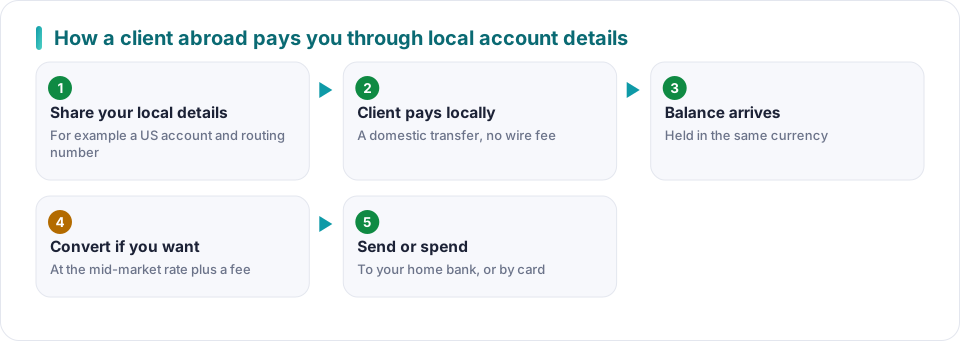
A provider such as Wise opens accounts that carry local details in several countries. Wise's own pitch, as reported, is a free account with balances in 10 or more currencies, and the ability to send 50 or more currencies to 80 or more countries. The same source says fees can be as low as 0.33 percent, uses the mid-market rate, and typically delivers within one to two business days.
- Local account details
- A real account number plus routing, sort code or IBAN in another country, so payers treat you like a local.
- Mid-market rate
- The midpoint of the currency market's buy and sell prices, the rate you see in a search engine.
- EMI
- An electronic money institution. Authorised to issue e-money and process payments, but not a bank.
- Safeguarding
- The rule that customer funds are held separately from the firm's own money.
- ACH
- The US domestic bank transfer network. See IBAN, SWIFT and routing numbers.
An e-money account is not a bank
Wise is listed on the London Stock Exchange and authorised by the UK Financial Conduct Authority as an electronic money institution. That is a recognised licence, but different from a bank licence.
| Bank deposit | E-money balance | |
|---|---|---|
| Where it sits | On the bank's balance sheet | Safeguarded in separate accounts |
| Deposit insurance | In many countries, up to a limit. See deposit insurance explained | Depends on the provider and country, so read the safeguarding statement |
When it beats a wire
Getting paid
Clients pay to local details. You avoid the intermediary banks that skim a fee from each wire.
Converting
You see the fee and the mid-market rate. Compare with your bank's markup.
Spending abroad
A card in the local currency avoids a foreign transaction fee on every purchase.
Learn how to compare in international transfers and exchange rates.
What to watch
Verify with your own ID
Providers must verify who you are. Use your own documents, in your own name.
Do not park everything in one place
Keep an emergency balance in a bank with deposit insurance, and keep a second payment method.
Check the route
Fees and delivery times differ by currency pair and country. Use the live calculator before you commit.
Keep records for tax
Balances and conversions may be reportable in your home country.
Questions people ask
Is money in a Wise account insured like a bank deposit?
Do not assume so. An electronic money institution is not a bank. Providers safeguard customer funds in separate accounts, but whether a deposit insurance scheme applies depends on the provider, the country and the product. Read the provider's safeguarding page.
What is the mid-market rate?
The midpoint between the buy and sell prices in the currency market, the rate you see on a search engine. Providers that show it and charge a visible fee are easier to compare.
Can I use a multi-currency account to avoid my home country's rules?
No. Tax, foreign-account reporting and exchange-control rules still apply to money held abroad. Keep records and follow local rules.
Sources
Written from these pages and checked against them on October 6, 2026. Programs and rules change, so check the provider’s current terms before you decide.
- #banking
- #wise
- #multi-currency
- #mid-market rate
- #e-money
- #iban
- #international transfer
- #local account details
General information, not financial, legal or travel advice. Your own card terms and the provider’s current rules always come first.