You can pick the best rewards card at home and lose all of it on a trip. The reason is the foreign transaction fee: a charge, commonly about 3%, that some issuers add to purchases made in another currency or processed outside the US. This page sorts the cards that most people ask about.
The arithmetic
- -1%
- Net on a 2% cash back card that charges 3% abroad
- $30
- Fee on a $1,000 trip's worth of purchases at 3%
- $0
- Fee on cards that waive it
2% reward minus 3% fee
1,000 x 0.03
The reward is yours to keep
Which cards charge it
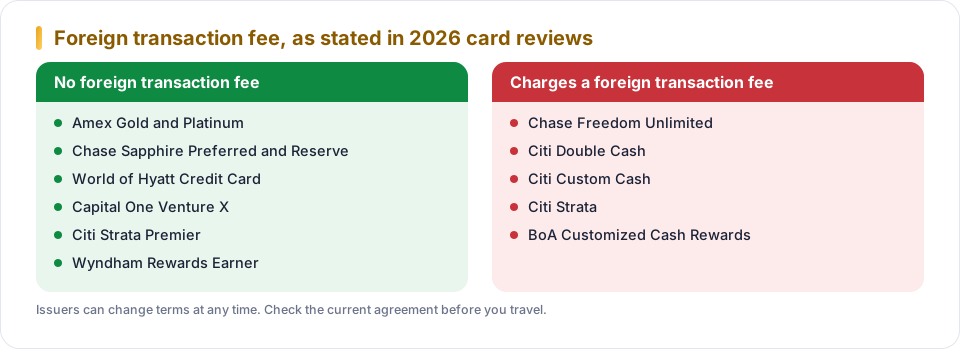
Notice that the no-fee side is mostly cards with annual fees. The best everyday no-fee-for-life cards are exactly the ones that charge abroad, which is why many travellers carry one of each: a no-fee-abroad card for the trip and a flat-rate card for home. See the best US cards for your spending style for how these fit together.
What else to check before you pay abroad
Read your card's agreement
The words to look for are "foreign transaction" or "currency conversion". The fee may be quoted as a percentage of each purchase.
Pay in the local currency
If a terminal offers to charge you in your home currency, decline. That "dynamic currency conversion" has its own rate and cannot be removed by the card. See paying abroad.
Plan for cash separately
ATMs have their own fees and a no-fee card does not cover them. See cash and ATMs abroad.
Carry a second card
Cards get blocked, lost or unaccepted. Keep a second card on a different network in another place. If one is lost, see the first hour after a lost or stolen card.
What the fee costs on a real trip
At 3 percent, the fee grows with every purchase made abroad.
| Spending abroad | Fee at 3 percent |
|---|---|
| 1,000 dollars | 30 dollars |
| 3,000 dollars | 90 dollars |
| 6,000 dollars | 180 dollars |
Put that next to a no-fee card's annual fee. A card that costs 95 dollars a year pays for itself, on this one measure, once you spend about 3,170 dollars abroad in the year, before counting any other reward or benefit. If you travel less than that, a card you already own may be the cheaper choice, and the rest of the value has to come from points, credits or protections.
Check a card in two minutes
Search the agreement
Open the cardmember agreement or the rates and fees page and search for "foreign". The line states the percentage, or says there is none.
Read the first statement
After your first purchase abroad, look for a separate fee line next to the transaction.
Ask in the app
Most issuers answer in chat. Ask whether purchases billed in another currency by a foreign merchant online also carry the fee.
Questions people ask
Is a foreign transaction fee charged only abroad?
No. It can also appear on online purchases from a merchant outside the US that bills in another currency or processes the payment abroad, even if you never left home.
Does a no-fee card guarantee a good exchange rate?
It removes the fee, not the rate. Card networks set the rate used for the conversion and it is usually reasonable, but a cash advance or a 'pay in your currency' option at the till can still cost more.
Do cards that charge no fee have other catches?
Most travel cards come with annual fees. Compare the fee with the use you will get, as in the break-even guide, and do not open one only to save on a single trip.
Sources
Written from these pages and checked against them on October 6, 2026. Programs and rules change, so check the provider’s current terms before you decide.
- US Credit Card Guide (further reading): Credit cards with no foreign transaction fee (tag page)
- US Credit Card Guide (further reading): Chase Freedom Unlimited review (has a foreign fee)
- US Credit Card Guide (further reading): Capital One Venture X review (no foreign fee)
- US Credit Card Guide (further reading): Chase Sapphire Reserve review (no foreign fee)
General information, not financial, legal or travel advice. Your own card terms and the provider’s current rules always come first.