Most online accounts treat your phone number as proof that it is you. That is convenient until the number stops being yours. This guide covers the three ways it happens, how to reduce the risk in 15 minutes, and what to do in an emergency.
Three ways a number leaves your control
It lapses
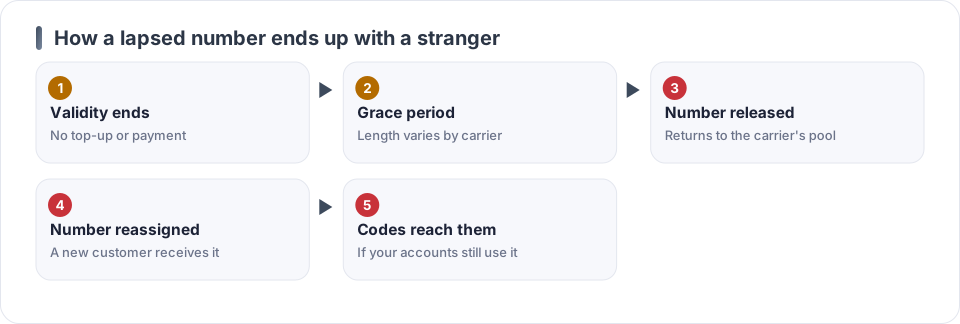
A prepaid plan runs out of validity and the carrier releases the number. See keeping a prepaid number alive.
You lose the profile
You change phones or replace an eSIM and forget to move it. See moving an eSIM to a new phone.
It is swapped
A scammer calls your carrier, says your phone is lost, and has the number activated on a SIM they hold.
What the FTC says about SIM swaps
The US Federal Trade Commission describes how a SIM swap works: a scammer tells your carrier your phone was lost or damaged and asks it to activate a new SIM on a phone they own. From that moment the scammer gets your calls, texts and data, including the codes sent to log in. The FTC lists these protections:
Set a PIN or password on your cellular account so changes need it.
Use stronger authentication on sensitive accounts. Text verification may not stop a SIM swap, so choose an authenticator app or a security key.
If your phone suddenly loses service or you get an unexpected SIM-activation notice, contact your carrier immediately.
A 15-minute audit
List every account tied to the number
Start with email, bank, brokerage, payment apps, tax portals, your password manager and your phone's account. Search your email for "verification code" to find the rest.
Move the valuable ones off text codes
Add an authenticator app or a passkey where the account supports it. See two-factor and passkeys.
Save recovery codes
Store them in a password manager or a printout. An app is a better key, but it is only a good key if you can recover it.
Update the number where text is the only option
If the account insists on text, switch it to a number you actively use and control.
Protect the carrier account
Add a PIN or password, turn on alerts, and check whether your carrier offers a lock on number transfers.
Set a renewal reminder
For any prepaid number you plan to keep, put an alert in your calendar a month before it expires.
If your phone suddenly goes dead
Contact your carrier
Ask to take back control of your number. Then change your carrier account password.
Check your accounts
Look at your bank, card and email for changes or charges you do not recognise, and report any to the company.
Reset what you can
Change passwords and move critical accounts to an app or passkey.
Report the incident
If you are in the US, IdentityTheft.gov lays out the steps. See also credit freezes and fraud alerts.
Questions people ask
Is a text code still better than nothing?
Yes. The FTC says that if text or email is the only option an account offers, it is better than nothing, but an authenticator app or security key is safer when available.
What are the signs of a SIM swap?
Your phone suddenly loses calls, texts and data, and you may get an unexpected message from your carrier that your SIM was activated on another device. Contact your carrier right away.
Can a recycled number really give a stranger my codes?
If your accounts still send codes or reset links to a number that has been reassigned, the new owner can receive them. Remove the number from accounts before you let it go.
Sources
Written from these pages and checked against them on October 6, 2026. Programs and rules change, so check the provider’s current terms before you decide.
General information, not financial, legal or travel advice. Your own card terms and the provider’s current rules always come first.